
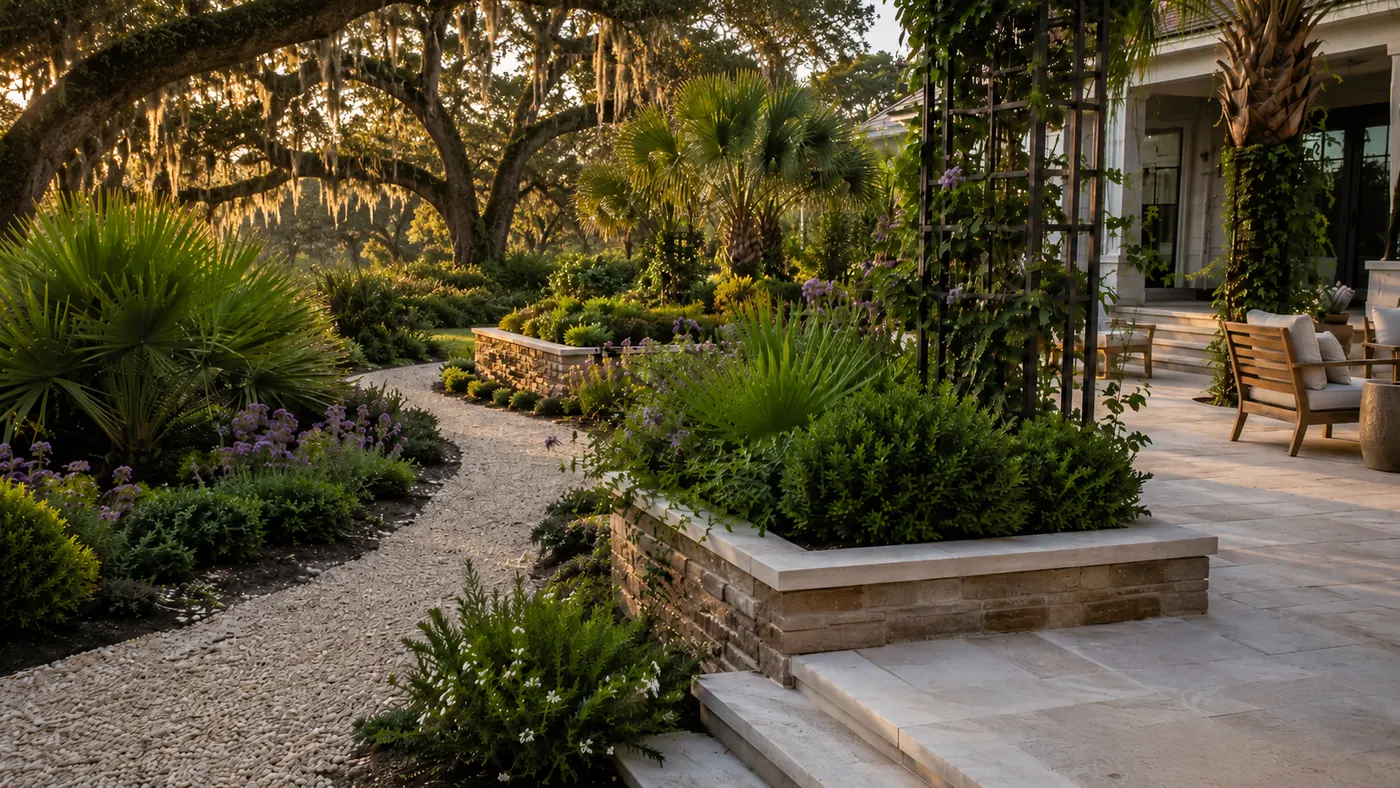
My clients consistently ask for gardens that are low maintenance yet beautiful, lush, and calming — spaces that instantly transport them into a relaxed state of mind. Often, they will pin images of dreamy woodland shade gardens to their inspiration boards, even when I am standing on a property just feet from the salt marsh, with no tree cover and temperatures hitting 105 degrees in July.
Almost immediately after requesting hostas and peonies comes the next requirement: the garden must be easy to care for, need very little watering or special attention, and be simple enough for a “mow, blow, and go” maintenance crew to manage without guidance. I cannot help but laugh every time I hear it. But honestly, I love this kind of assignment because it is absolutely achievable with a few thoughtful shifts:
- Reduce or rethink traditional lawn areas;
- Incorporate hardscape using local, natural materials;
- Prioritize native plantings that thrive in the environment naturally.
First, let’s address the big green elephant in any traditional landscape: the lawn. It is no secret that I am not a fan of large lawns. Lawns are essentially environmental dead zones. Aside from chinch bugs and voles, very little life thrives there. Moreover, in the coastal South, a lawn is, by definition, high maintenance. It demands an enormous amount of water during the summer months, making it expensive to maintain. It struggles in salty environments, and it performs especially poorly beneath shady live oaks — which is ironic, considering the Savannah and Charleston area’s most iconic imagery is the Spanish moss-draped live oak canopy.
In spaces dominated by live oaks, I typically recommend removing the lawn altogether and replacing it with pine bark mulch, pine straw, artificial turf, or a thoughtful combination of the three, punctuated by shade loving plants like Soft Caress Mahonia, azaleas, palmetto palms or Leopard’s Ear, also known as Tractor Seat Plant. Replacing traditional turf with intentionally designed garden beds or carefully integrated artificial turf dramatically reduces long-term watering costs while creating a healthier environment for surrounding trees, shrubs, and wildlife.
Another way to reduce your overall garden maintenance is by adding a thoughtfully designed hardscape. A simple gravel pathway leading to a clean, inviting patio with modern raised beds constructed from local materials can completely transform a landscape while significantly reducing mowing, watering, and upkeep. Xeriscaped or partially xeriscaped spaces using crushed shell or gravel paired with patios of warm bone travertine, accented with inlaid shells or regional stone, are another option and allow the landscape to feel connected to its coastal environment rather than in conflict with it. More importantly, these hardscape elements create a destination — a place to sit, unwind, and fully enjoy the beauty and ease of your outdoor space. Bottom line, you do not have to spend thousands on water or maintenance where none or only few plants exist.
Finally, let’s talk about the plantings themselves. Instead of choosing plants better suited to a hillside succulent garden in Malibu simply because the Instagram photo looks incredible, choose plants that naturally thrive in your environment.
Take boxwood, for example. It is undeniably beautiful, but in the coastal South it can be difficult and expensive to maintain. It lacks drought tolerance, is highly susceptible to diseases such as box blight, scorches in the intense summer sun, and often becomes patchy if not pruned consistently and carefully. A far better alternative is Dwarf Yaupon Holly — a native coastal variety that is salt resistant, heat and drought tolerant, deer resistant, and easily shaped into crisp hedges or sculptural topiary forms.
Other excellent native choices include bee balm, which naturally resists deer while attracting bees, butterflies, and other pollinators, and passionflower vine, a vigorous native climber that serves as a larval host plant for the Gulf Fritillary butterfly. By incorporating plants that are naturally adapted to the coastal environment, gardens become not only easier to maintain, but also richer, more dynamic, and ecologically alive.
Ultimately, creating a low-maintenance coastal garden does not mean sacrificing beauty or atmosphere. By reducing unnecessary lawn space, incorporating thoughtful hardscape design, and prioritizing native plantings, you can cultivate a landscape that feels tranquil, intentional, and deeply connected to its surroundings — one that will thrive beautifully for years to come.